
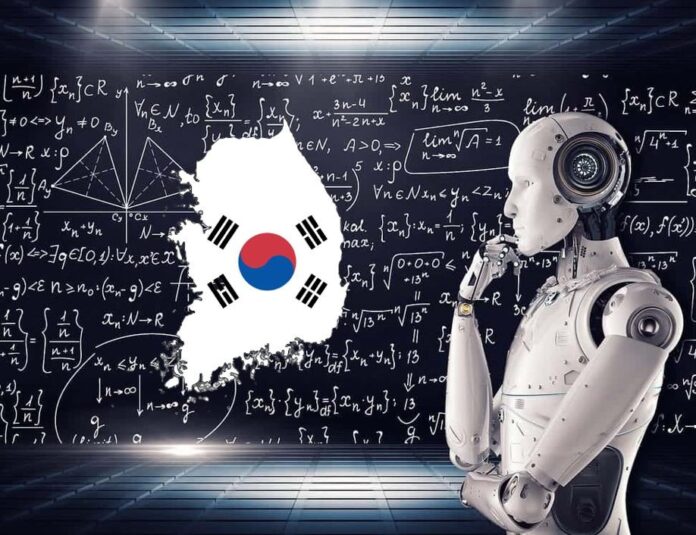

South Korea, long wedged between Washington and Beijing in the multipolar contest for technological primacy, is now deliberately pitching its burgeoning AI ecosystem as a third path — a sovereign alternative that neither bows to Silicon Valley’s behemoths nor to the sprawling data leviathans of Beijing. The moment is real, its rhetoric urgent, and its ambitions reflect both national pride and geopolitical self‑interest. At the center of this push is Naver, the homegrown search giant often dubbed “South Korea’s Google.” With its AI and cloud services, the company is not merely building another tech stack; it is marketing a politically palatable cloud and AI alternative for nations wary of American or Chinese data influence. CEO Kim Yuwon underscores a proposition tailored to local cultural, political, and regulatory contexts — a contrast to the standardized offerings of U.S. and Chinese tech powers.
Seoul’s logic is clear: in a world where data sovereignty and digital autonomy are increasingly equated with national security, the old model of outsourcing intelligence infrastructure to foreign titans no longer suffices. For many emerging markets, alignment with U.S. or Chinese tech ecosystems carries embedded political strings — a reality that Korean firms now hope to exploit.
Beyond the Buzzword: The Architecture of a Sovereign AI Push
This isn’t just a PR stunt. The pivot includes:
- Massive hardware investment: South Korea plans to add tens of thousands of high‑end GPUs and develop global cloud regions — infrastructure designed to rival AWS, Azure, and Alibaba Cloud.
Targeted regional deployment: Projects already underway span Saudi Arabia (digital twins), Thailand (localized AI assistants), and Japan (elder care services) — signaling a push into markets where Western and Chinese options face distrust or political unease.
Niche cultural and language strengths: The ability to tailor AI to local languages and social nuances — a persistent shortcoming of many global models — gives Seoul a foothold beyond cookie‑cutter algorithms emanating from Silicon Valley or Shenzhen. Yet, experts remain cautious. South Korean cloud and AI exports have historically struggled to achieve global scale, and data acquisition outside the domestic market — a sine qua non for competitive large‑language models — is a steep challenge.
Geopolitics of Sovereign Technology: Between Order and Compromise
This South Korean AI gambit must be read in the wider frame of Seoul’s hedging strategy: a nation that sells cars into the U.S., semiconductors into China, and culture everywhere in between — all while trying to cultivate a third ecosystem that reduces dependency on its two largest tech patrons.
Domestically, AI is no abstract goal; it’s tied to President Lee Jae‑Myung’s economic reset, part of a broader plan to boost productivity and secure a top‑three AI power status. Demand for AI tools outstrips supply, and South Koreans are among the most fervent adopters of U.S. AI services globally, positioning the country as both a captive market and a potential exporter of next‑generation technologies.
Yet, as Seoul courts autonomy, it cannot fully divorce technology from diplomacy. American export controls on advanced chips, Chinese ambitions for digital primacy, and the global scramble for AI standards mean that sovereignty in tech is also sovereignty in statecraft and neither comes easily.
Skepticism at the Crossroads
Amid the optimistic framing lies a constellation of contradictory signals:
- Seoul still heavily relies on U.S. semiconductor technology and allied cloud infrastructures.
- Chinese companies like DeepSeek — despite regulatory roadblocks in Korea — continue to pressure markets with aggressive, low‑cost AI offerings.
- Global developers gravitate toward large ecosystems with massive training data and entrenched communities — a network effect that Korean players must overcome.
There’s also the question of soft power versus hard infrastructure: can a Korean AI stack really dethrone entrenched Western platforms or the rapidly expanding Chinese digital sphere? That remains unproven.
A Realistic Hedge, Not a Revolution
South Korea’s AI initiative is geopolitical craftsmanship rather than technological fantasy. It neither naively rejects U.S. or Chinese systems nor fully embraces either; instead, it tries to carve a third vector of influence in an era where control of digital intelligence equals geopolitical leverage.
Whether this vision translates into tangible power, or remains an articulate aspiration, depends on Seoul’s ability to sustain investment, internationalize data and infrastructure, and cultivate a genuinely global user base. In the contest of great powers, it may not topple Washington or Beijing, but it could ensure that Seoul’s sovereignty extends into the digital age — not as a junior partner, but as a distinct and strategically flexible actor.